When your child receives an autism diagnosis, the journey ahead can feel overwhelming. As a parent in Patna, you’re likely asking: “What therapies does my child need?” “How will they help?” “Where do I start?” This comprehensive guide answers these questions and more, helping you understand how speech therapy and occupational therapy can transform your child’s development and quality of life.
Understanding Autism and the Role of Therapy
Autism Spectrum Disorder (ASD) affects approximately 1 in 500 children in India, with varying degrees of challenges in communication, social interaction, sensory processing, and daily living skills. While autism is a lifelong condition, early intervention through evidence-based therapies can dramatically improve outcomes.
Research consistently shows that children who receive comprehensive therapy—particularly combining speech therapy and occupational therapy—make significantly greater progress than those receiving single-modality treatment. In Patna, access to quality autism therapy services has improved considerably, with specialized centers now offering integrated treatment approaches.
What is Speech Therapy for Autism?
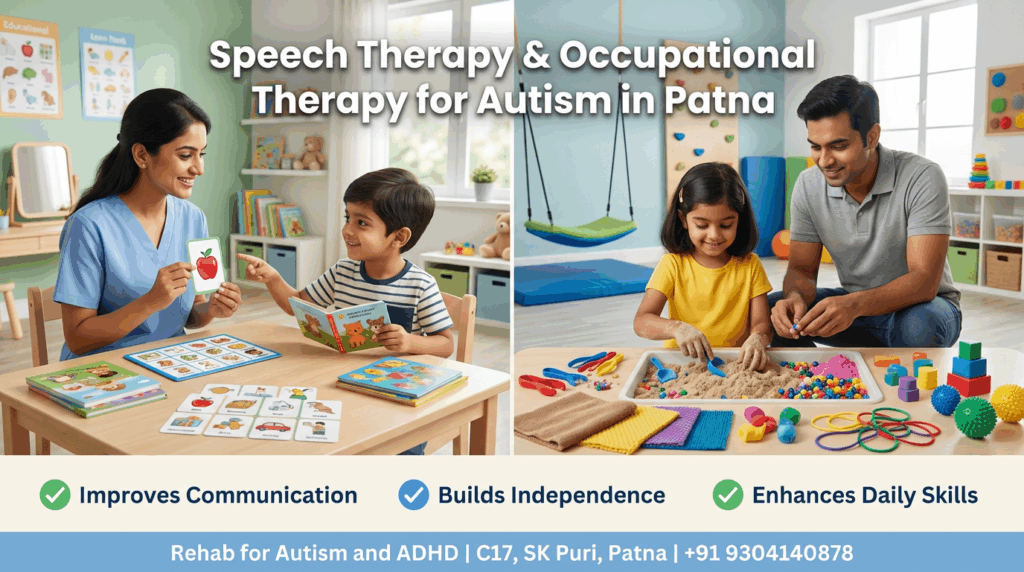
Speech therapy, delivered by certified Speech-Language Pathologists (SLPs), addresses far more than just pronunciation. For children with autism, speech therapy encompasses a comprehensive approach to communication development.
Key Benefits of Speech Therapy
Enhanced Verbal Communication
Speech therapy helps children build word formation, sentence structure, vocabulary, and contextual language use. Children learn to express their needs, wants, and emotions effectively, reducing frustration and behavioral challenges.
Strengthened Non-Verbal Communication
For non-verbal children or those with limited speech, therapists teach effective use of gestures, facial expressions, picture communication systems (PECS), or sign language. These alternative communication methods provide essential tools for self-expression.
Improved Social Interaction
Through role-play, social stories, and visual prompts, children learn to interpret social cues like body language, facial expressions, and tone of voice. This leads to better peer relationships, reduced social anxiety, and improved confidence in group settings.
Reduced Behavioral Issues
When children can communicate effectively, frustration-related behaviors like meltdowns, aggression, or withdrawal decrease significantly. Speech therapy equips children with the tools to express themselves appropriately.
Boosted Independence and Confidence
As communication skills improve, children gain independence in expressing preferences, asking for help, and participating in educational and social activities. This builds self-esteem and overall well-being.
Speech Therapy Techniques and Methods
Speech therapy for autism progresses through individualized stages:
- Stage 1: Non-Verbal Foundations – Focuses on gestures, facial expressions, and physical cues for children who are pre-verbal.
- Stage 2: Basic Language – Introduces vocal speech for delayed or non-speaking children, starting with simple sounds and words.
- Stage 3: Vocabulary Expansion – Builds words and sentences for expressing complex ideas and needs.
- Stage 4: Conversational Skills – Teaches back-and-forth dialogue, turn-taking, and maintaining conversations.
Additional methods include play-based activities, visual aids, sign language, and strategies to overcome echolalia (repetitive speech) by breaking down “chunks” of speech into functional, meaningful words.
What is Occupational Therapy for Autism?
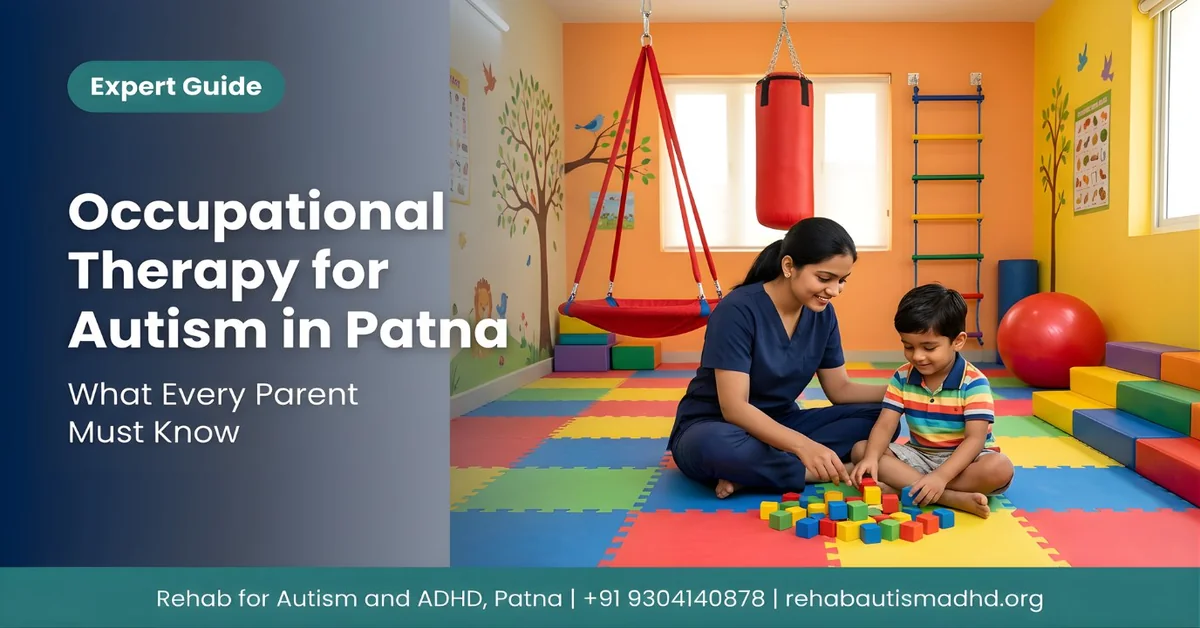
Occupational Therapy (OT), provided by certified Occupational Therapists, focuses on helping children develop the skills needed for daily living, play, school, and social participation.
Key Benefits of Occupational Therapy
Sensory Integration
Up to 80% of autistic children experience sensory processing challenges—over- or under-sensitivity to sounds, textures, lights, or movement. OT employs sensory integration therapy and “sensory diets” (structured daily activities) to help children regulate their responses to sensory input, reducing overload, anxiety, and improving focus.
Clinical studies show marked improvements in sensory processing after as few as five OT sessions, with children demonstrating better tolerance for classroom environments, clothing textures, and social situations.
Daily Living Skills
OT targets independence in self-care routines including dressing, hygiene, grooming, meal preparation, and organization. Therapists use visual schedules, hands-on activities, and structured play to build these skills, fostering confidence and reducing reliance on caregivers.
Fine Motor Development
Fine motor skills—writing, buttoning, using utensils, manipulating objects—are refined through engaging tasks like finger painting, playdough, tweezers, and cutting activities. OT strengthens hand muscles, improves coordination, and enhances body-object awareness, directly supporting academic and daily tasks.
Gross Motor Skills
OT also addresses balance, coordination, running, jumping, and playground skills, improving overall physical competence and enabling participation in sports and recreational activities.
Emotional Regulation and Behavior
Through sensory strategies and structured activities, OT helps children develop self-regulation skills, manage transitions, and cope with changes in routine—all critical for school success and family harmony.
Speech Therapy vs. Occupational Therapy: Understanding the Differences
While both therapies are essential for many autistic children, they target different developmental areas:
| Aspect | Speech Therapy | Occupational Therapy |
|---|---|---|
| Primary Focus | Communication: articulation, vocabulary, sentence formation, social language, comprehension | Motor/sensory skills: fine/gross motor coordination, sensory integration, self-care, daily function |
| Autism-Specific Goals | Improves expressive/receptive language, turn-taking, using AAC tools or signs | Addresses sensory sensitivities, hand skills, emotional regulation, independence |
| Examples | Teaching pronunciation, modeling conversations, feeding/oral motor exercises | Deep pressure exercises, swinging for sensory regulation, buttoning clothes, pencil grip |
Why Your Child May Need Both Therapies
Children with autism often require both speech therapy and occupational therapy when facing overlapping challenges. Here’s why combined treatment is so effective:
Complementary Skills Development
OT provides sensory and motor foundations (body awareness, calming techniques, sitting tolerance) that make speech therapy more effective. A child who can regulate sensory input and sit comfortably is better able to engage in language practice.
Integrated Real-World Application
Shared play-based activities allow speech therapists to build conversational skills while occupational therapists add motor and sensory elements for real-world application. For example, a child might practice requesting items during a sensory play activity, combining communication goals with sensory regulation.
Comprehensive Development
Autism affects multiple developmental domains simultaneously. Addressing only communication without tackling sensory issues, or focusing only on motor skills without improving language, limits overall progress. Combined therapy creates synergistic effects that accelerate development.
Signs Your Child Needs Speech Therapy
Consider speech therapy evaluation if your child shows these signs:
- ✓ Delayed or Limited Speech – Fewer words than peers, late talking, or no spontaneous speech to express needs
- ✓ Echolalia – Repeating words or phrases out of context, echoing questions instead of answering
- ✓ Nonverbal Communication Challenges – Limited gestures (no pointing or waving), lack of eye contact, using others’ hands as tools
- ✓ Motor Speech Issues – Trouble imitating sounds, forming words despite understanding language
- ✓ Social-Pragmatic Deficits – Robotic or unexpressive voice, difficulty starting/maintaining conversations, little interest in communicating
- ✓ Unconventional Language Patterns – Scripted speech, high-pitched or singsong tone, out-of-context words
Signs Your Child Needs Occupational Therapy
Consider occupational therapy evaluation if your child experiences:
Sensory Red Flags:
- Over- or under-reacts to noise, touch, lights, textures, or movement
- Covers ears, avoids certain clothes/foods, hates toothbrushing or hair washing
- Seeks intense input: constantly crashing, jumping, spinning, chewing objects
- Frequent sensory overload or meltdowns in busy environments
Motor Skills Challenges:
- Trouble using utensils, holding a pencil, drawing, coloring, or using scissors
- Difficulty with buttons, zippers, snaps, shoelaces
- Frequent tripping, bumping into furniture, poor balance
- Trouble throwing/catching balls or using playground equipment
Self-Care and Independence Issues:
- Ongoing challenges with dressing, managing fasteners, tying shoes
- Difficulty with brushing teeth, hair care, bathing routines
- Delays in feeding skills, toilet training, or independent dressing
Attention and Regulation:
- Can’t sit still or stay on task much more than peers
- Easily distracted by sights/sounds
- Frequent meltdowns, difficulty calming down
- Trouble with transitions or changes in routine
What to Expect During Therapy Sessions in Patna
Initial Assessment
Both speech and occupational therapists begin with comprehensive evaluations to understand your child’s current abilities, challenges, and strengths. Assessments typically include:
- Developmental history and parent interviews
- Standardized testing appropriate for your child’s age
- Observation of your child in various activities
- Identification of specific goals and priorities
Individualized Treatment Plans
Based on assessment results, therapists create personalized treatment plans with specific, measurable goals. Plans are reviewed and adjusted regularly (typically every 3-6 months) to ensure continued progress.
Session Structure
Speech Therapy Sessions (typically 30-60 minutes, 2-5 times per week):
- Play-based activities to build language naturally
- Structured exercises for articulation and pronunciation
- Social skills practice through role-play and games
- Parent coaching on home practice strategies
Occupational Therapy Sessions (typically 30-60 minutes, 2-5 times per week):
- Sensory integration activities (swinging, deep pressure, tactile play)
- Fine motor skill development (cutting, writing, manipulating objects)
- Self-care practice (dressing, feeding, grooming)
- Gross motor activities (balance, coordination, strength)
Progress Monitoring
Therapists track progress through data collection, regular assessments, and parent feedback. You should see:
- Early progress (3-6 months): Initial improvements in target areas
- Clear gains (6-12 months): Significant, documented progress toward goals
- Meaningful change (1-2 years): Substantial, lasting improvements in daily functioning
Choosing the Best Autism Treatment Center in Patna
When selecting a therapy center for your child, prioritize these essential criteria:
1. Qualified and Certified Professionals
Verify that therapists hold proper credentials:
- Speech-Language Pathologists: Master’s degree in speech-language pathology, professional certification
- Occupational Therapists: Bachelor’s or Master’s degree in occupational therapy, professional certification
- Specialized Training: Additional certifications in autism-specific interventions (IBCCES Autism Certificate, Certified Autism Specialist, sensory integration certification)
2. Evidence-Based Interventions
The center should use therapies supported by scientific research and proven effective for autism, including play-based therapy, sensory integration, visual supports, and structured teaching methods.
3. Individualized Treatment Plans
Look for centers that conduct comprehensive assessments, create personalized treatment plans, regularly monitor progress, and involve parents in goal-setting.
4. Integrated Services
The best centers offer multiple therapies under one roof—speech therapy, occupational therapy, behavioral therapy (ABA), and early intervention programs—ensuring coordinated care and consistent goals across all therapies.
5. Family-Centered Approach
Effective therapy centers provide parent training, offer techniques for home practice, maintain regular communication about progress, and recognize that family involvement accelerates improvement.
6. Positive, Supportive Environment
Visit the center and observe: Is it welcoming and child-friendly? Are therapists patient, compassionate, and skilled at building rapport? Does the center use positive reinforcement and celebrate small victories?
Autism Therapy Cost in Patna
Understanding the financial investment helps families plan effectively:
Typical Session Costs in Patna:
- Speech Therapy: ₹1,500 – ₹3,000 per session
- Occupational Therapy: ₹1,500 – ₹3,000 per session
- Comprehensive Assessment: ₹2,000 – ₹5,000
Monthly Investment: For 8-12 sessions per therapy (recommended frequency), expect ₹12,000 – ₹36,000 monthly per therapy type.
Cost-Saving Options:
- Package deals for multiple sessions (reduced per-session cost)
- Government programs and CGHS rates for eligible patients
- Insurance coverage (check with your provider about autism therapy benefits)
While costs may seem significant, early intervention is an investment in your child’s future independence, academic success, and quality of life.
Real Results: Success Stories from Combined Therapy
Research and clinical outcomes demonstrate the effectiveness of combined speech and occupational therapy:
Communication Breakthroughs
Children who were non-verbal at ages 2-3 often progress to using functional phrases and simple conversations after targeted speech therapy combined with sensory regulation through OT.
Independence Gains
Combined OT and behavioral work help children master self-care skills—dressing themselves, using utensils, managing hygiene—greatly increasing independence and family quality of life.
Social Participation
Better peer interaction, shared play, and participation in school activities emerge when speech therapy builds communication skills while OT addresses sensory challenges that previously limited social engagement.
Behavioral Improvements
OT-focused sensory integration combined with communication strategies leads to reduced meltdowns, better tolerance of new environments, and improved emotional regulation.
Academic Success
Many children receiving comprehensive early intervention progress to general education or inclusion classrooms, with some achieving grade-level or above performance in reading and math.
A large outcomes study found that even children with more significant challenges showed clinically meaningful gains in adaptive behavior when receiving coordinated therapy services.
How to Get Started with Autism Therapy in Patna
Step 1: Seek Professional Evaluation
If you suspect autism or have concerns about your child’s development, consult a child psychiatrist, developmental pediatrician, or child psychologist experienced in autism diagnosis.
Step 2: Obtain Comprehensive Assessments
Once diagnosed, schedule evaluations with both a speech-language pathologist and an occupational therapist to identify specific needs and create baseline measurements.
Step 3: Choose a Quality Treatment Center
Research autism therapy centers in Patna, visit facilities, meet therapists, and ask about their approach, credentials, and family involvement practices.
Step 4: Commit to Consistent Therapy
Regular attendance and consistent practice are crucial for progress. Most children benefit from 2-5 sessions per week of each therapy type.
Step 5: Practice at Home
Therapists will provide strategies and activities for home practice. Daily reinforcement of therapy goals accelerates progress and helps skills generalize to real-world settings.
Step 6: Monitor Progress and Adjust
Work closely with your therapy team to review progress every 3-6 months, celebrate achievements, and adjust goals as your child develops.
Why Choose Rehab for Autism and ADHD
At Rehab for Autism and ADHD, we understand that every child’s journey is unique. Our center stands out as a leading autism treatment provider in Patna because we offer:
- ✓ Certified Speech-Language Pathologists and Occupational Therapists with specialized training in autism
- ✓ Evidence-Based Interventions including play-based therapy, sensory integration, AAC, and social communication training
- ✓ Integrated Services combining speech therapy, occupational therapy, behavioral therapy, and early intervention under one roof
- ✓ Individualized Treatment Plans tailored to your child’s specific needs, strengths, and goals
- ✓ Family-Centered Approach with parent training, regular communication, and home practice strategies
- ✓ Comprehensive Assessments to identify your child’s unique profile and create targeted interventions
- ✓ Compassionate, Patient Therapists who celebrate every milestone and build strong relationships with children and families
Our mission is simple: to help every child with autism reach their full potential for communication, independence, and meaningful participation in family and community life.
Take the First Step Toward Your Child’s Brighter Future
Early intervention makes a lasting difference. Whether your child has been recently diagnosed with autism or you have concerns about their speech, language, sensory processing, or motor development, our team is here to help.
Don’t wait—the earlier therapy begins, the better the outcomes. Contact us today to schedule comprehensive speech and occupational therapy assessments and start your child’s journey toward greater communication, independence, and joy.
Contact Rehab for Autism and ADHD
Address: C17, SK Puri, Patna 800001, Bihar
Email: Rehabforautismandadhd2019@gmail.com | info@rehabautismadhd.org
Phone: +91 9304140878
Website: www.rehabautismadhd.org